

Showing posts with label Modern Iranian Poets. Show all posts
Showing posts with label Modern Iranian Poets. Show all posts


11/27/06
Enemy Nations, Emerging Voices
Enemy Nations, Emerging Voices,
a reading at the SF Main Library
This provocative reading features works from two new Words Without Borders anthologies: Literature from the Axis of Evil and Let Me Tell You Where I've Been: New Writing by Women of the Iranian Diaspora. These works celebrate the literature and humanity from so-called "enemy" nations and cultures. The event includes an appearance by special guest Alice Walker.
Wednesday November 29, 2006 6-8 pm (free)
San Francisco Main Library Auditorium
100 Larkin Street
San Francisco
Co-sponsored by The Center for the Art of Translation and Words Without Borders
Forugh Farrokhzad in Danish
By Mette Moestrup, Copenhagen, Denmark
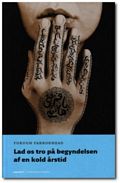
The Iranian poet Forugh Farrokhzad has been translated into Danish by the young poet Shadi Angelina Bazeghi, who was born in Iran and is now a student at the Danish Author School in Copenhagen. As her teacher I had the pleasure to assist her. The night we finished the Danish version of Farrokhzad's collection Let us believe in the beginning of a cold season... in Shadi's apartment, the weather shifted from Indian summer to thunder and lightning and rain. We almost became superstitious! Well, in many ways, this publication – this dialogue between Persian and Danish – is important. As you might know, the political rhetoric in Denmark is quite xenophobic, especially when it comes to Muslim immigrants. The discussion about freedom of speech (in connection with the Muhammed-drawings) has not made the rhetoric less harsh.
Forugh Farrokhzad’s poems have been used by the Iranian artist Shirin Neshat in his photographic series "Women of Allah". On the cover of the Danish version of Let us believe in the beginning of a cold season... is a picture by Neshat: A woman is holding her hand in front of her mouth, but still she is saying something. On her hand are written some lines from the poem "I feel sorry for the flowerbed" in Persian.
Forugh Farrokzhad is a complex symbol of freedom of speech. Her poems can certainly not be used to confirm cultural racism. I also think that her pathos and sensuality is challenging the concepts of moderne poetry (in a Western definition) – but that might be another story.
Some quotes from "I feel sorry for the flowerbed":
"All our neighbours are planting/ bombs and guns/ in their gardens in stead of flowers"
"I fear the time/ which has lost its heart"
11/24/06
Those Days: In Memory of Mohammad Mokhtari
Azar is the 9th month of the Iranian solar year. 30 days From 21st of November to 21st of December. Last days of autumn. Days of harvesting winds. Sometimes you pray for a magical amnesia, a total blank in the memory.
Poetic innovations, for a moment, surpass the techniques and forms; slip out of the texts and cross the intertextual relationships, come into the air and you can smell it, you can feel it, you can weight the load of words somewhere inside your chest. Sometime a poem is a metamorphosed poet based on the poetics of power melancholia.
These days the poet is a dead poem.

Mohammad Mokhtari left his residence at five o'clock in the afternoon of December 2 1998 and his body was identified at the coroner's office on December 8 1998. Know more.
11/21/06
Modern Persian Poetry: The First Steps
The modern movements in Persian poetry began with the first stages of modernization processes in Iranian political and social orientations. The available information in English language on the internet is not very sufficient but maybe this article by Mahmoud Kianoush can give a perspective of what has happened during 40's and 50's.

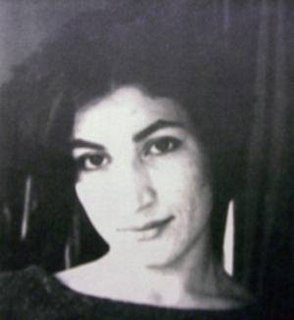
The frontier Iranian poet, Forough Farokhzad.

To have an idea about the first modern works by Nima Youshij, the father of modern Persian poetry, I suggest you to see here.

The most influential Iranian modern poet, Ahmad Shamlou, can be visited here, and his translated poems can be found here.

The frontier Iranian poet, Forough Farokhzad.
Subscribe to:
Posts (Atom)